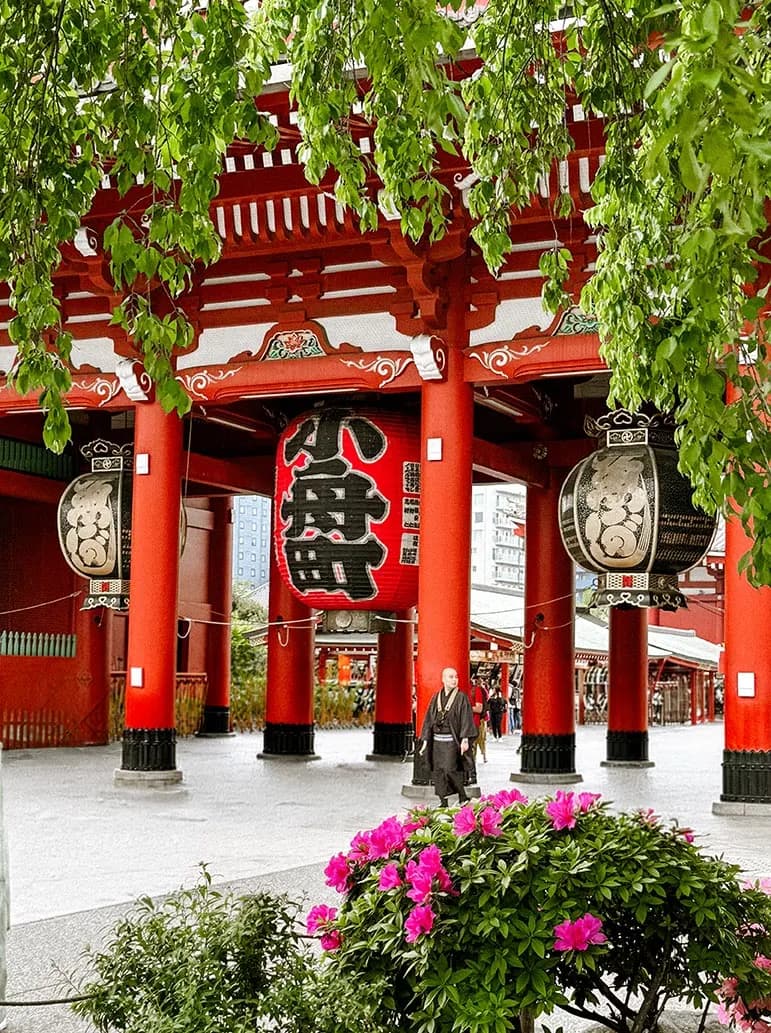
osaka, the city of food.
Five days in Osaka sounds like plenty. It isn’t, and we say that as people who keep trying. Nara, Kobe and Kyoto are all within an hour or so, and before long your Osaka trip has very little Osaka left in it.
So this isn’t an hour-by-hour plan. It’s what we’d tell a friend over a beer, because on a short trip, what you leave out matters as much as what you put in. Want to see it first, competitive archery included? The full video is just below.
Tokyo is lively, there’s always something new and interesting to do but the real reason why we keep on coming back is because of the food! You don’t need to go to a michelin star or fancy restaurant to have amazing good quality food.
This is what we’d tell a friend planning a first trip. It covers what’s worth booking before you fly, which neighborhoods to wander, where we stay and eat, and the day trips that earn their train fare.

5 DAYS Snapshot
Best time to visit: Spring and Autumn
Weather: Hot, humid summers, mild winters
Getting around: Trains, subways and plenty of walking with a Suica or Pasmo card.
Currency: Japanese yen, and carry cash for shrines, small shops and food stalls.
Language: Japanese, with basic English in tourist areas.
Airports: Kansai (KIX) or Itami (ITM). Kansai is the main airport and sits closer to the city if you can choose.
Best For: Street food, nightlife, easy day trips.
When to visit Osaka
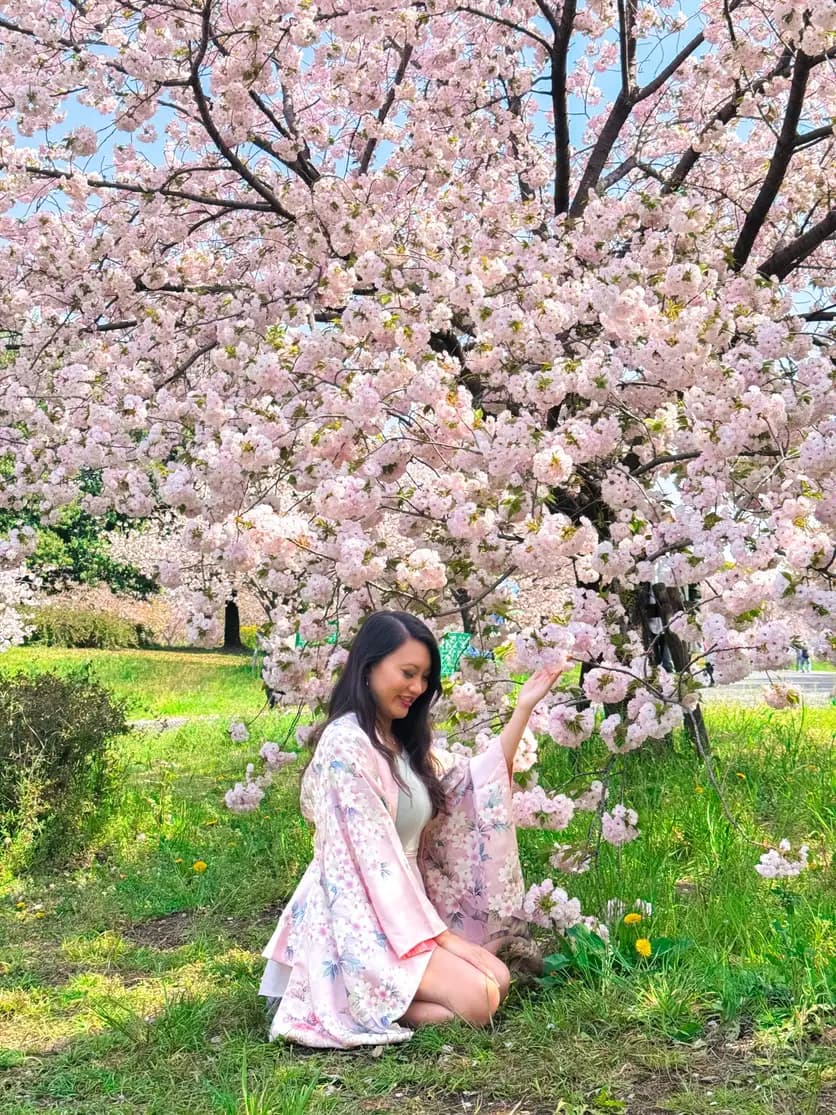
Spring and autumn are the comfortable seasons, with cherry blossoms around the castle in early April and clear, mild days in October and November. Summer is sticky enough to make you rethink your outfit by 10 a.m. Doing Tokyo in spring as well? Our Tokyo cherry blossom guide covers the timing.
From Kansai Airport, the Nankai limited express reaches Namba in about 35 to 40 minutes, which is handy, because that’s where we’d want you to stay.
Osaka experiences worth your time
We’d squeeze these into almost any first trip. Most sit close together, so they slot in nicely between meals (the real itinerary).
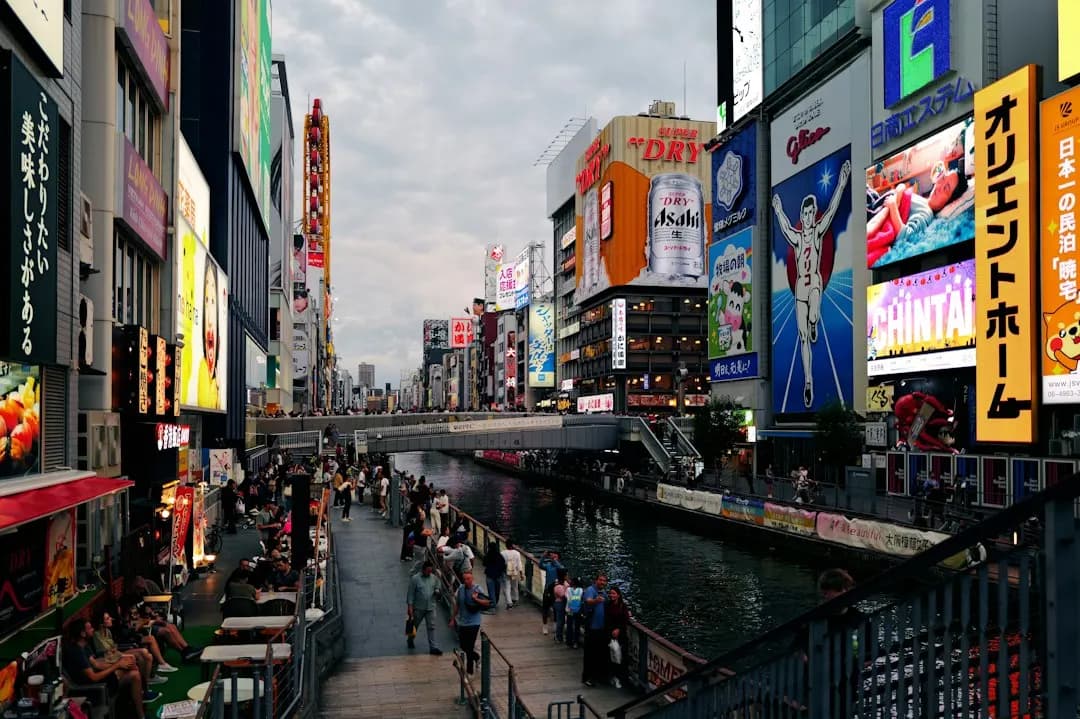
Dotonbori & Shinsaibashi
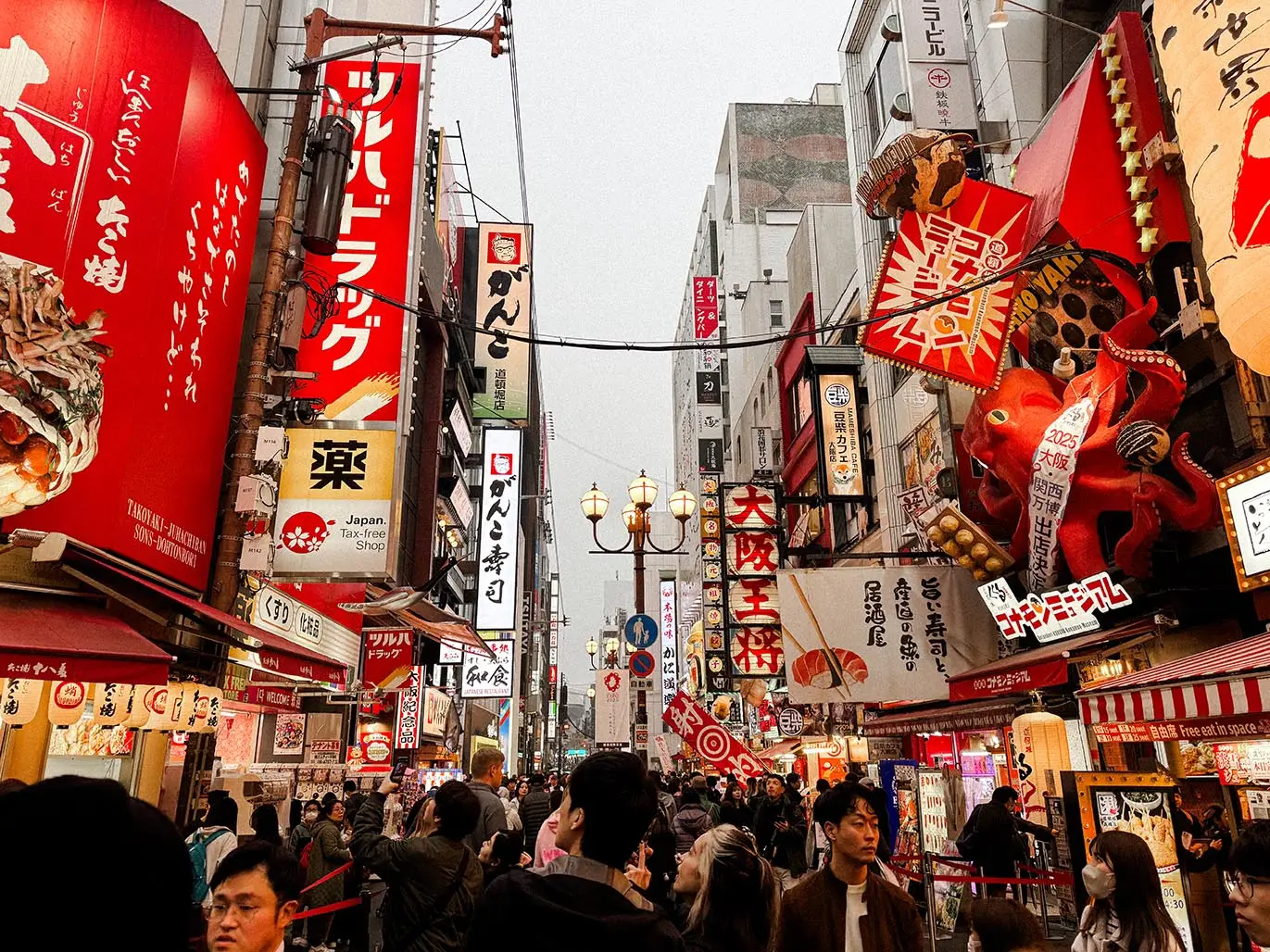
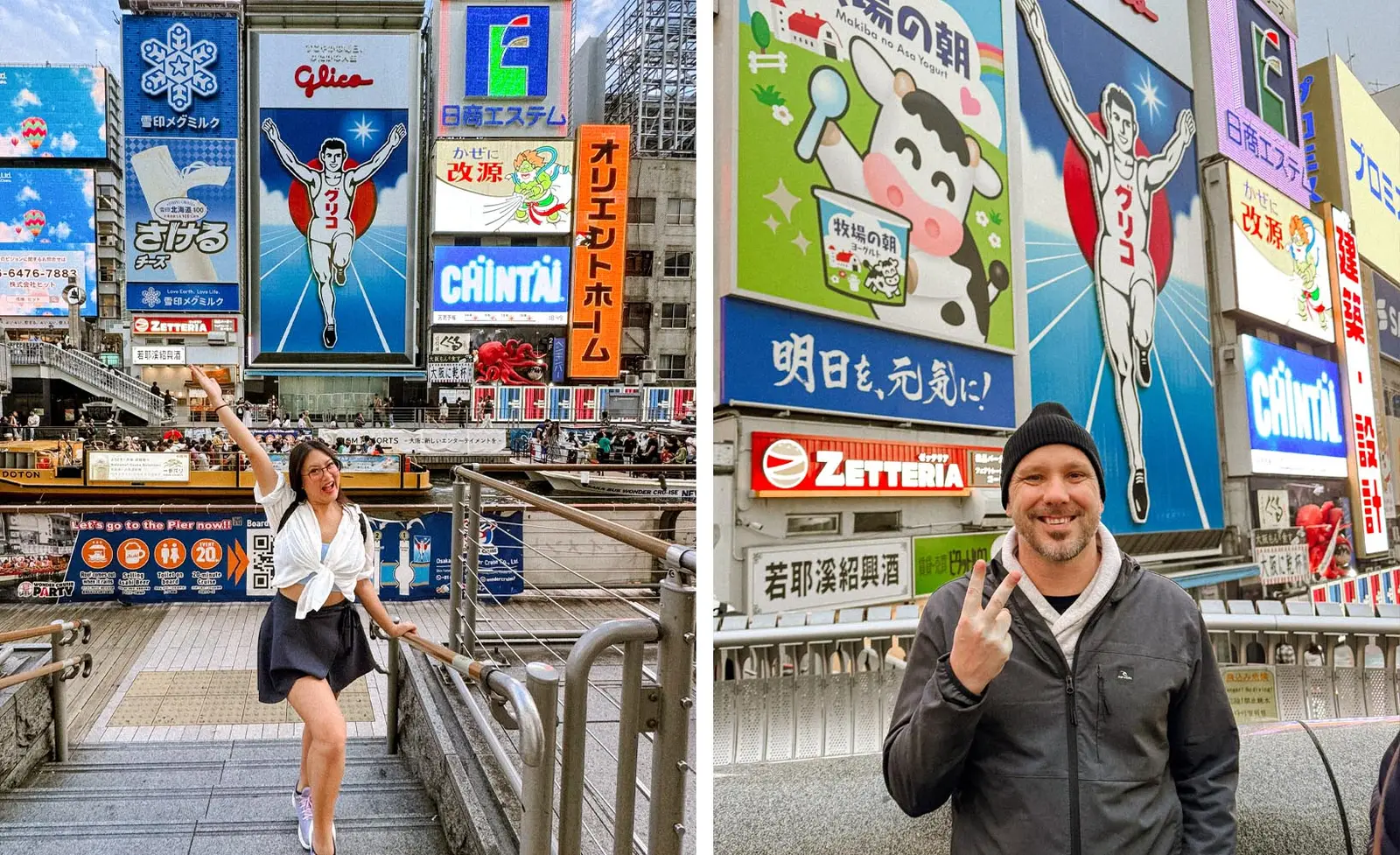
It’s crowded, and you will take the same Glico Man photo as everyone else. Don’t fight it. Just come back after dark, when the neon wobbles across the canal and the whole place suddenly makes sense. We’d make this your first night, eating whatever smells best.
Hozenji Yokocho
Walk two minutes away from the neon and you’re in a narrow stone lane lined with old restaurants, tiny bars and paper lanterns. Hozenji Temple sits in the middle, and people stop to splash water over the Mizukake Fudo statue, which is now so covered in moss it looks fuzzy. Come in the evening, when it feels like another city entirely.
Namba Yasaka Shrine
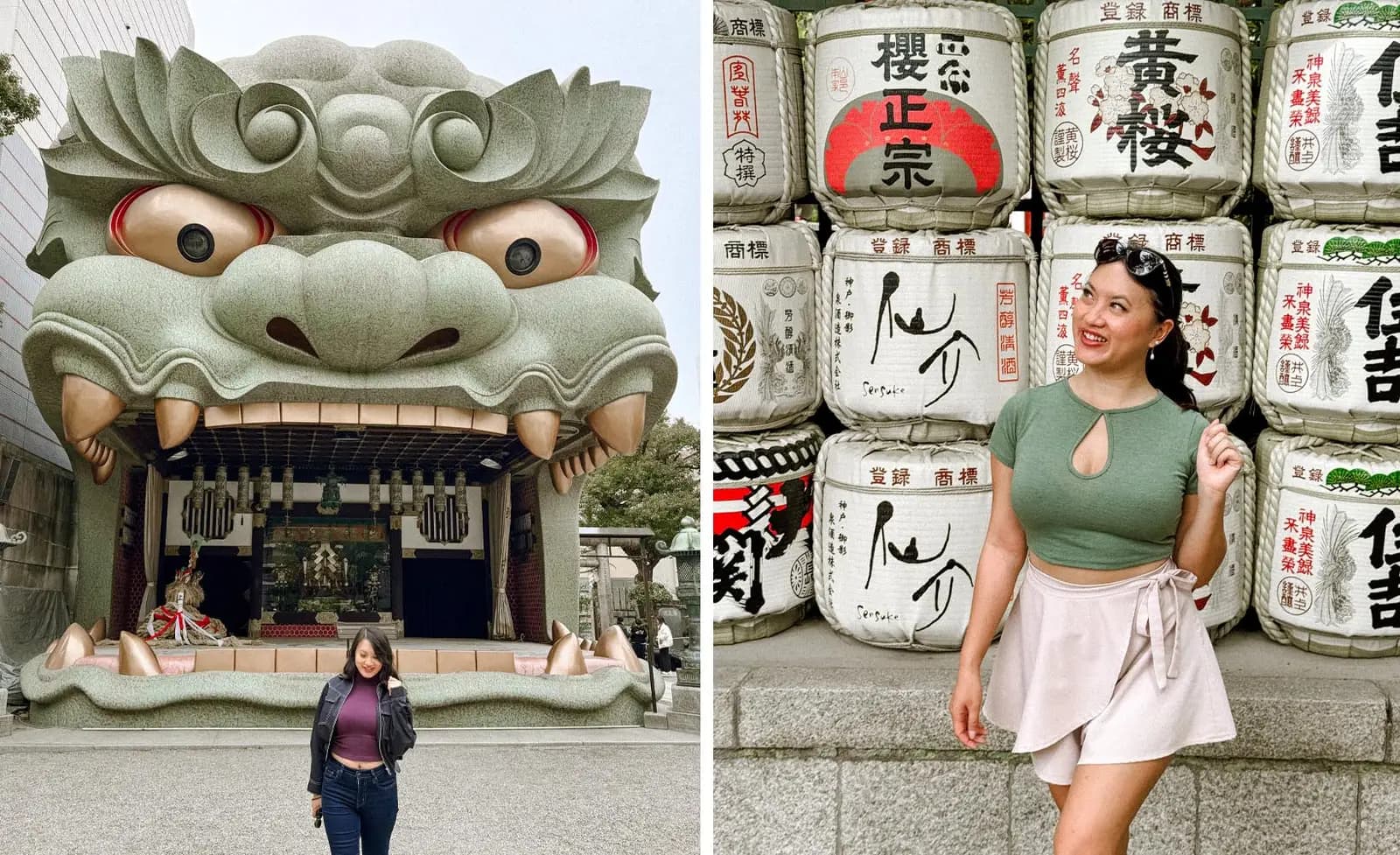
When I first found this shrine, I had it almost to myself. Not anymore, but the 12-meter lion head is still worth the short walk from Namba. Its open mouth is said to swallow evil spirits and bring good luck.
Ohatsu Tenjin
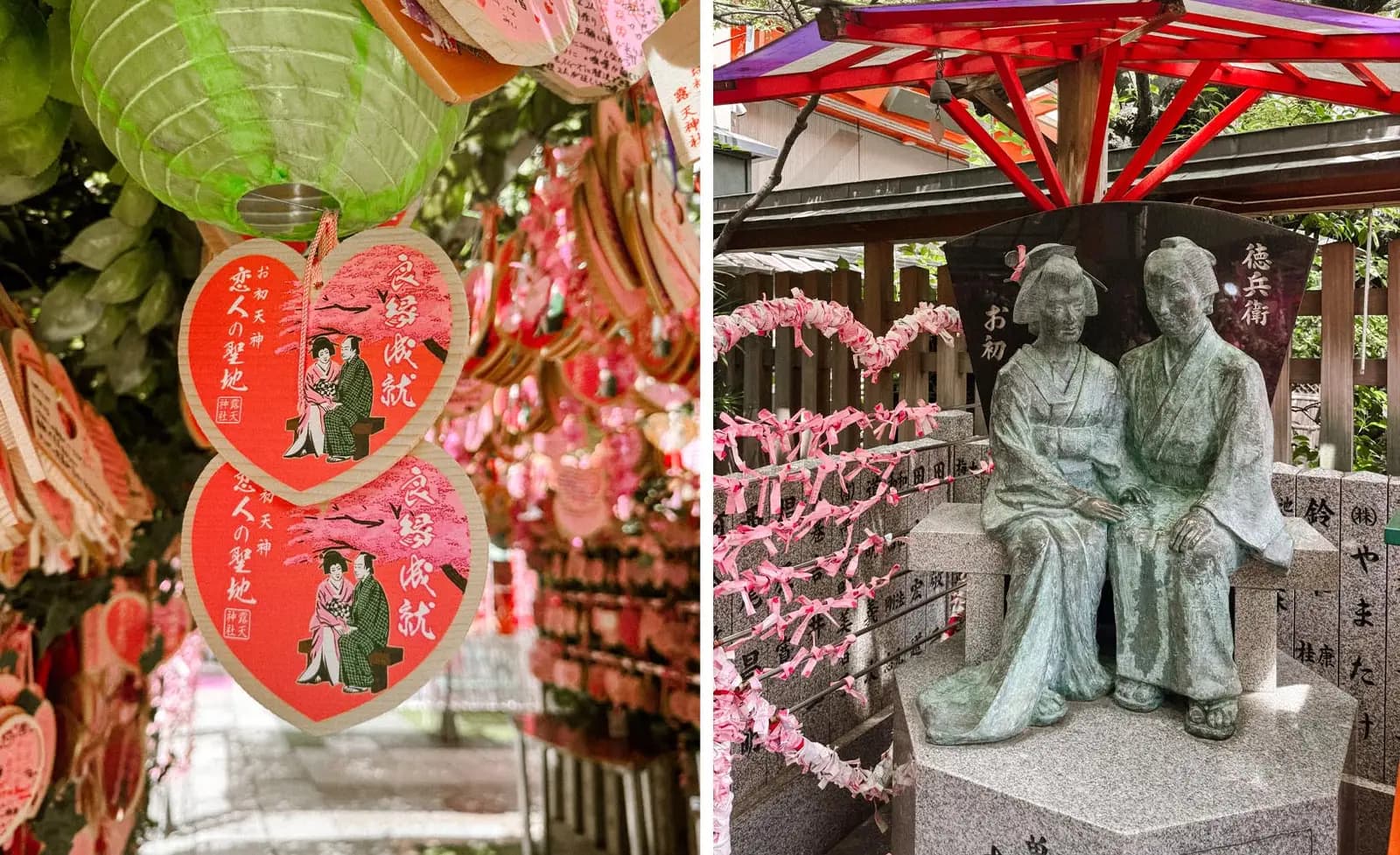
This little shrine in the middle of Umeda has turned into a shrine for love, with pink hearts everywhere, love fortunes and heart-shaped ema for couples. The story behind it is a lot less cute. In 1703, two young lovers, Ohatsu and Tokubei, took their lives here because they couldn’t be together, and their story became one of Japan’s most famous bunraku puppet plays. There’s a statue of the pair now, and we tell the whole story in the video.
Osaka Castle
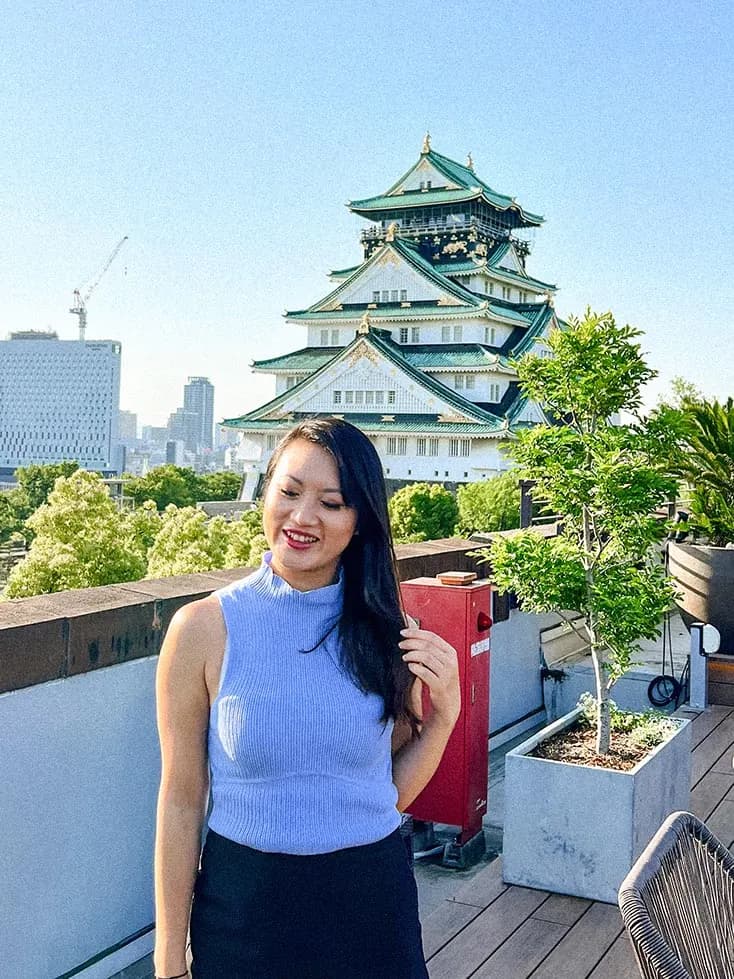
Do you need to go inside? Honestly, not really. The tower is a 20th-century reconstruction with a museum inside (¥1,200, about $8usd), so it’s one for history lovers. Our favorite castle view comes with a charcoal grill anyway. More on that in the food section.
The park is free and open around the clock, so if you skip the museum, come in the late afternoon, walk the moats as the light turns golden and stay to see the tower lit up after dark.
Shinsekai
Shinsekai is Osaka at its most retro and a little scruffy, in the best way. Think old arcades, oversized signs, kushikatsu (deep-fried skewers) at every turn and jinrikisha rickshaws waiting for customers. Dustin left convinced he’s a certified ninja thanks to an archery game. The video will be the judge of that. Skip the ride up Tsutenkaku Tower and save your skyline moment for the next one.
Osaka experiences worth booking
Each of these swallows at least half a day, so this is where you start choosing.
Miracle World Osaka
We didn’t expect much. It’s far smaller than teamLab, but the mirror rooms and 360-degree projections kept us there longer than planned. Allow an hour or two. It’s in the basement of the Namba Oriental Hotel, with timed tickets from ¥2,800 (about $18).
Universal Studios Japan
If you go, give it the whole day. Super Nintendo World and the Wizarding World of Harry Potter were our favorites, and neither one is just for kids. Arrive early, and price out an Express Pass if the budget stretches. Tickets start at ¥8,400 (about $54), change by date and are only sold online.
Osaka Aquarium Kaiyukan
If aquariums are your thing, this is a great one. You spiral slowly down around one enormous Pacific Ocean tank and see it at different depths. And yes, there are whale sharks. Tickets are timed and cost about ¥2,800 to ¥3,500 (roughly $18 to $23) for adults, depending on the date. Plan on half a day, and eat before you go in, because there’s no re-entry.
Solaniwa Onsen Osaka Bay Tower
Solaniwa is basically an onsen theme park. You swap your clothes for a yukata and drift between hot-spring baths, saunas and a big rooftop garden. Entry is about ¥2,310 to ¥3,630 (roughly $15 to $23) depending on the day, plus a ¥150 bath tax. Tattoos are fine as long as every one is covered with the stickers sold there. It’s a gentle place to try your first onsen. Nervous about the etiquette? Don’t worry, we got you, download our FREE First Time Guide to Onsens in Japan it will help walk you through it.
Popular, but we’d probably skip
All good, just not essential on a short first trip.
- Kuromon Market: Fun if you’ve never seen a Japanese market, but we’d save the stomach space for other places. Our Kuromon Market video shows you what you’d be trading. If you go, go early.
- Amerikamura: Great for streetwear, vintage and hip-hop fans. If that isn’t you, skip it with a clear conscience.
- teamLab Botanical Garden Osaka: Lovely, but if Tokyo or Kyoto is on your list, save your teamLab for there. Here’s why we love teamLab Planets in Tokyo.
- Katsuo-ji & Expo ’70 Park: One is the daruma temple, the other is home to the Tower of the Sun. Both are outside the center and take a big bite out of your day.
Where to stay in Osaka
Stay near Dotonbori or Shinsaibashi. You’ll walk home from dinner instead of riding the subway, the nightlife is on your doorstep, and the Midosuji Line runs straight up to Umeda and Shin-Osaka for day trips. Honmachi, a couple of stops north, is a quieter option on the same line. We mostly stayed in APA hotel chains, it is small but just enough for your stay. I don’t recommend it for families or if you have lots of big suitcases.
Namba & Dotonbori
- Mercure Tokyu Stay Osaka Namba: About four minutes from Namba Station, with Shinsaibashi an easy walk away.
- APA Hotel Namba-Shinsaibashi: Compact, dependable budget rooms on the Namba side, a short walk from both Namba and Shinsaibashi stations.
Shinsaibashi
- APA Hotel Namba Shinsaibashi East (Higashi): Opened in 2022, two minutes from Nagahoribashi Station and about six from Shinsaibashi.
- APA Hotel Namba Kita Shinsaibashi Ekimae: Three minutes from Shinsaibashi Station, on the quieter west side.
- Sugata Hotel Osaka Shinsaibashi, Series by Marriott: New in 2026, roughly 300 meters from Shinsaibashi Station.
- Comfort Hotel Osaka Shinsaibashi: A reliable business hotel about five minutes from Shinsaibashi Station.
- Sotetsu Fresa Inn Osaka-Shinsaibashi: About five minutes from Shinsaibashi Station, a little east of the crowds.
- The Bridge Hotel Shinsaibashi: Three minutes from Shinsaibashi and Yotsubashi stations, with nice extras like massage chairs.
- unito OSAKA Shinsaibashi West: Apartment-style rooms near Nishi-Ohashi Station, good if you’re staying a while.

Learn three phrases and watch how people respond. — Sumimasen covers excuse me and sorry — Arigatou gozaimasu is thank you — Oishii means delicious. Say that last one in a small restaurant and you’ll make someone’s evening.
Where to eat in Osaka
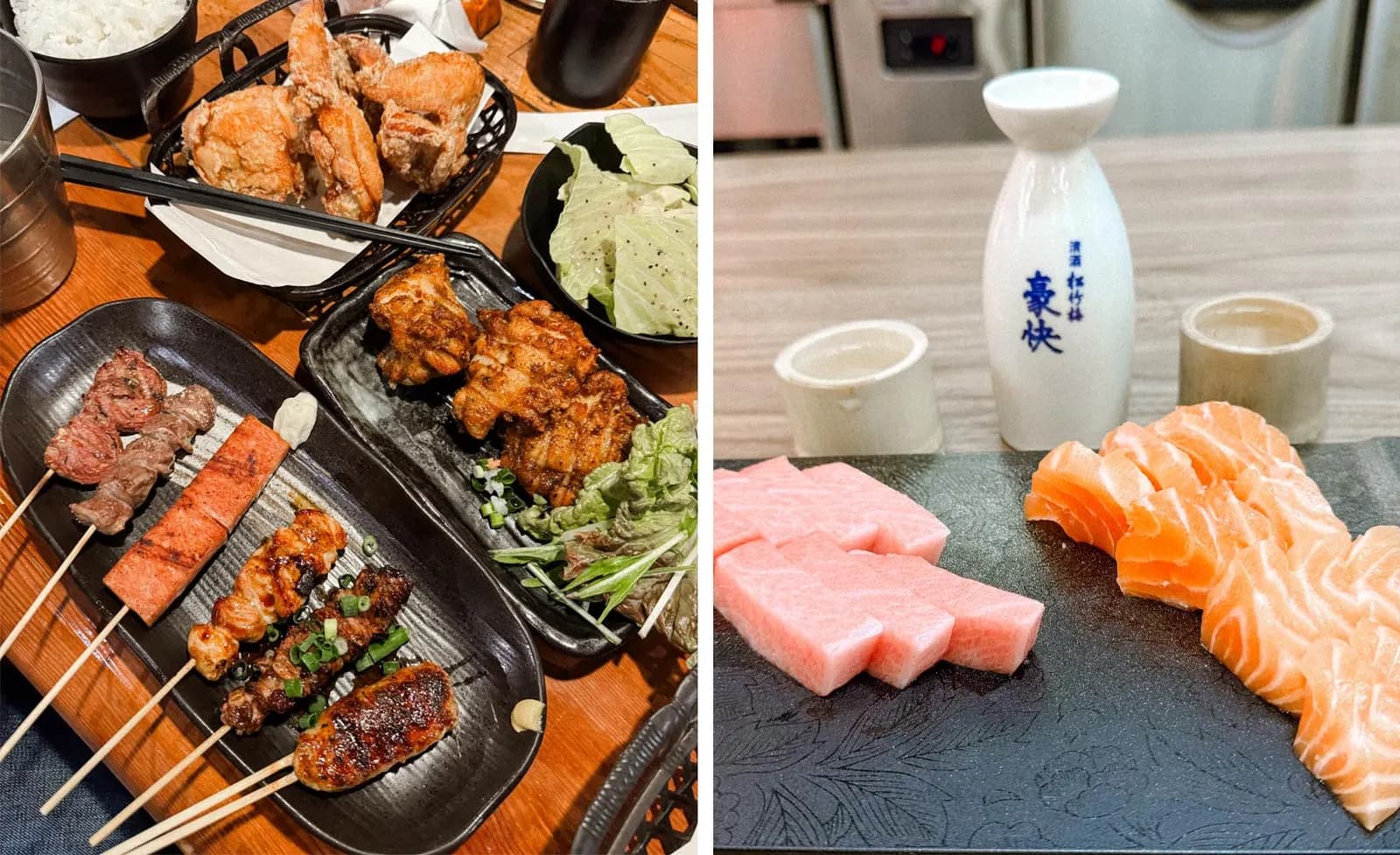
Tokyo gets the Michelin stars. Osaka gets the food. Here are the five we’d send a friend to first.
Yakiniku Kitan Hozenji
Japanese beef lunch bento in a converted old restaurant in Hozenji Yokocho, with a little sign on the table explaining three ways to eat it. You can’t reserve the bento, so get there 30 minutes before opening. Twenty is not enough.
Chao Chao Gyoza (Namba)
Thin, crispy, bite-sized gyoza that disappear faster than seems reasonable. The Kyoto branches have long queues, but in Namba we’ve almost always walked straight in.
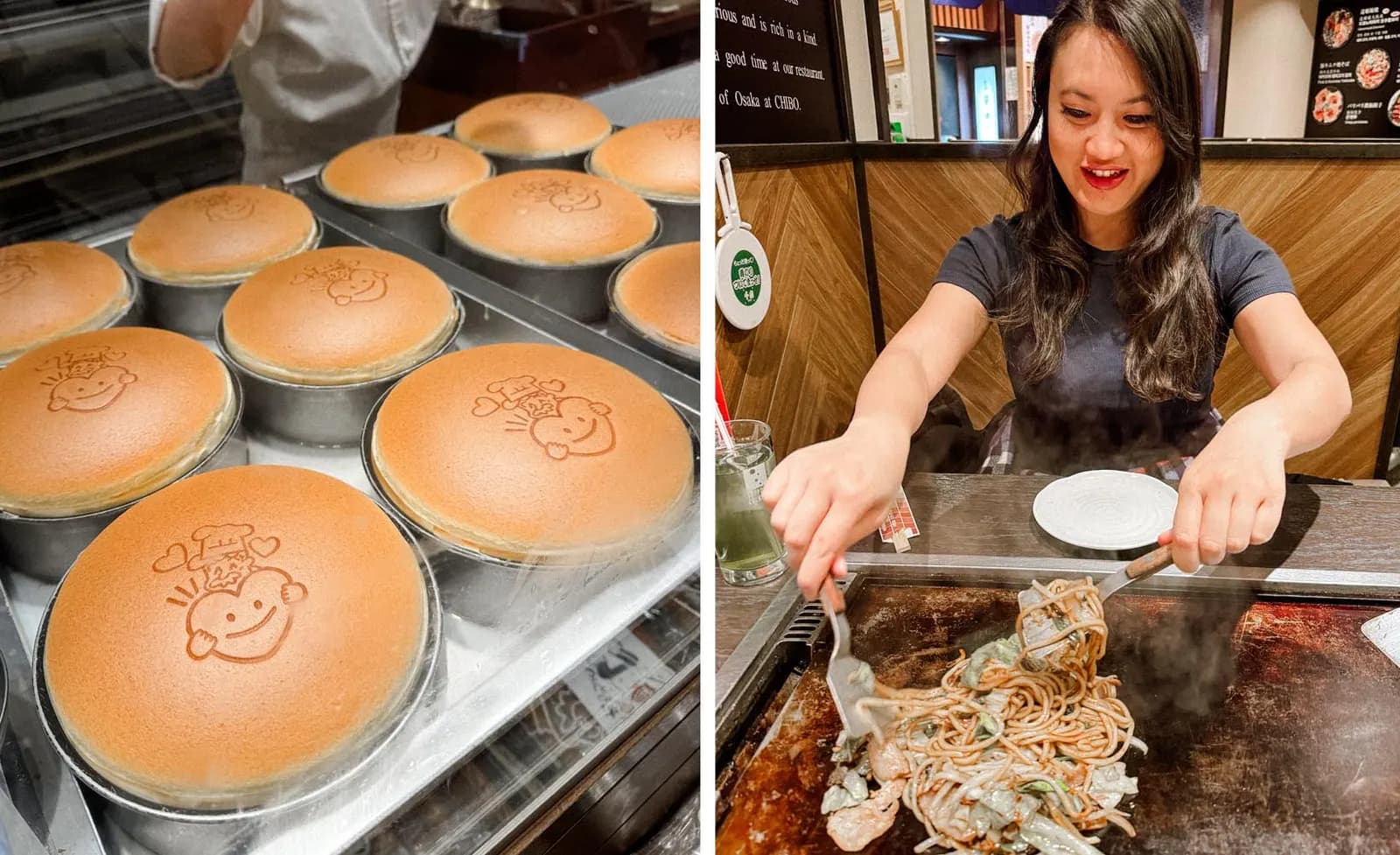
551 Horai
Started in Namba in 1945 and famous for butaman, steamed buns stuffed with pork and onion. We never board a bullet train without a 551 box, and the shumai is the quiet star.
Uncle Rikuro’s Cheesecake
Light, jiggly and alarmingly easy to finish in one sitting. Skip the big queues and go to the takeaway counter in the basement of Daimaru Shinsaibashi.
Still hungry? The riverside breakfast we kept going back to, the all-you-can-eat wagyu night and the parfait Dustin nearly walked past are all in our Youtube video. Also, a hidden gem you need to add on your list, watch the video to get the location!
Day trips from Osaka
This is where five days quietly turns into three. Pick the ones you actually care about and give them a proper day.
Nara
Our easiest yes. It’s about 40 minutes from Namba on the Kintetsu line. Say hello to the deer (official shika senbei crackers only, never your own snacks), but don’t stop there. The temples are the real reason to go, and they’re wonderful for collecting goshuin (video coming soon).
Kobe
You don’t need to go to Kobe for Kobe beef, because Osaka serves plenty of it. Go for the city. It’s about 20 minutes from Osaka Station on JR, and the waterfront and Nankinmachi, Kobe’s Chinatown, make an easy day.
Kyoto
It works as a day trip (Hankyu gets you from Umeda to Kyoto-kawaramachi in under an hour), but if it’s your first time in Japan, Kyoto deserves a few nights of its own. Our Kyoto guide is on the way.
If your Kyoto day falls on a weekend or holiday, time it for Hankyu’s Kyo-train Garaku, a seasonal-themed train that only runs on weekends and holidays. There’s no booking or surcharge, just the normal fare**.**
Hiroshima & Miyajima
The shinkansen gets you from Shin-Osaka to Hiroshima in about 90 minutes, and the Peace Memorial Park and museum are reason enough to go. Add the ferry to Miyajima and you’re looking at a very long day. If you can’t give it the time it deserves, save it for another trip.
How many days do you need in Osaka?
Five is plenty, as long as you stop trying to do everything. That covers the neighborhoods, the castle, a couple of shrines and a lot of eating. Then you add Universal. Then Nara. Then someone mentions Hiroshima, and five days isn’t five days anymore. Osaka can fill ten without breaking a sweat.
Send Your Suitcase Ahead
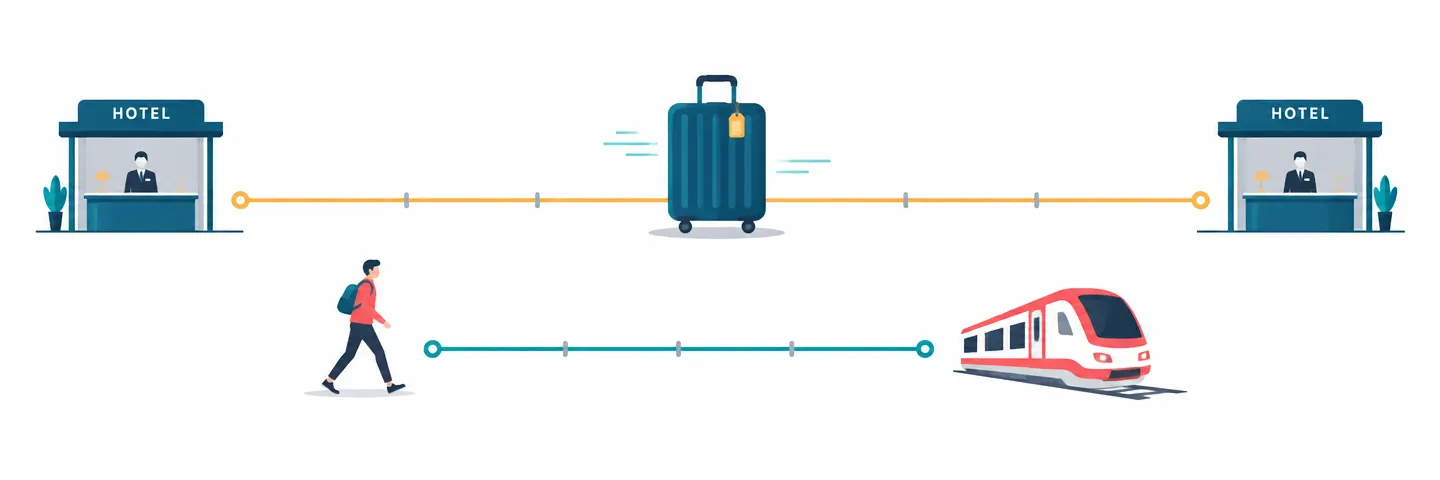
Japan’s luggage delivery moves bags between hotels with almost unsettling reliability. At reception, say “Takkyubin onegaishimasu” and staff will fill in the Yamato TA-Q-BIN forms with you. A standard suitcase from Tokyo to Kyoto or Osaka costs about ¥2,170–¥3,160 (roughly $14–$21) and usually arrives the next day.
Do you need a JR Pass? Not for Tokyo and these day trips. A 7-day pass is ¥50,000 on the official site, and the routes above are cheaper on a Suica card and single tickets.
Arrange your delivery at least one day before checkout, and keep a day or two of clothes and essentials in a small backpack. Rolling onto the bullet train with a light bag and a bento is one of the great small pleasures of travelling here.